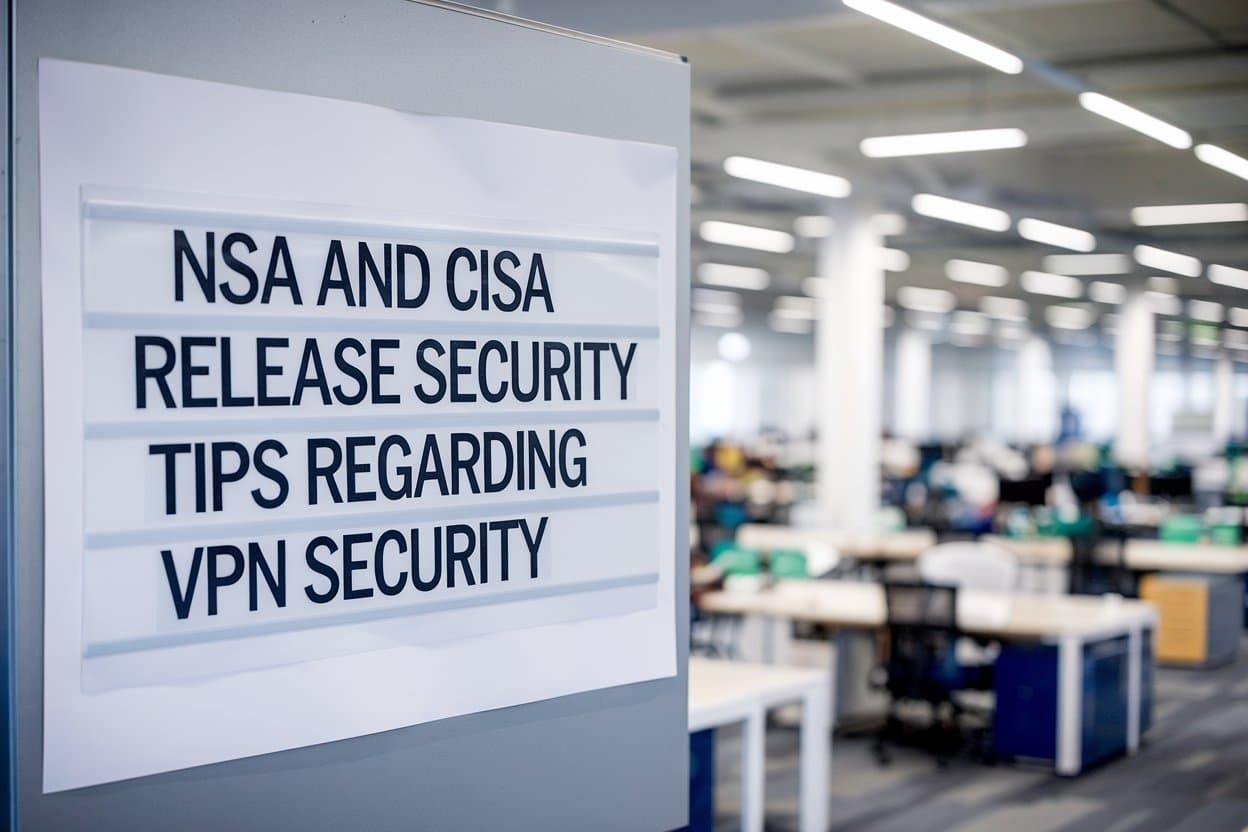
The digital world is evolving, and organizations all over the world are facing increasing threats to their network infrastructure. Over the past few years, the National Security Agency (NSA) and the Cybersecurity and Infrastructure Security Agency (CISA) released detailed VPN security guidelines to help organizations strengthen their remote access solutions. The guidelines outline key vulnerabilities and offer practical guidance to protect virtual private networks against sophisticated cyberattacks.
Understanding the Critical Need for Enhanced VPN Security
Remote-access VPN servers allow off-site users to tunnel onto secure networks, thereby potentially exposing such entry points to misuse by malicious cyber actors. The agencies further note that "VPN servers are entry points into protected networks, making them attractive targets" to both nation-state and cybercrime actors.
The growing dependence on work-from-home has accelerated VPN usage to orders of magnitude across all industries. Yet, this growth also brings with it phenomenal security threats. Additionally, the majority of organizations are unable to properly implement VPN hardening solutions, exposing their networks to possible attacks.
Key Vulnerabilities Addressed in the VPN Security Guidelines
Exploitation of such devices can facilitate credential harvesting, remote code execution on the VPN device, weakening of encrypted traffic sessions using cryptography, hijacking of encrypted traffic sessions, and arbitrary reads of sensitive data from the compromised systems.
The CISA and NSA VPN security guidelines tackle these common attack vectors head-on:
| Credential Harvesting | Attackers can steal user authentication information |
| Remote Code Execution | Malicious actors gain unauthorized control over VPN infrastructure |
| Session Hijacking | Encrypted communications become compromised |
| Data Exfiltration | Sensitive organizational data faces unauthorized access |
Essential Components of the NSA and CISA VPN Security Guidelines
Standards-Based Solution Selection
The agencies highly recommend that organizations prefer standards-based VPN solutions over proprietary ones. In addition, this ensures interoperability and security testing are enhanced. Standards-based solutions tend to have:
- Enhanced transparency in security deployments
- Daily security scanning and patching
- Enhanced support for security monitoring software
- Minimize vendor lock-in risks
Multi-Factor Authentication Implementation
Strong authentication controls are the first line of defense. Thus, the VPN security best practices emphasize the implementation of strong multi-factor authentication (MFA) protocols. Organizations must consider:
- Hardware-based authentication tokens
- Biometric identification systems
- Time-based one-time passwords (TOTP)
- Certificate-based authentication
Network Access Controls and Segmentation
The agencies strongly recommend organizations prioritize standards-based VPN solutions over proprietary alternatives. Moreover, this approach ensures better interoperability and security validation. Standards-based solutions typically offer:
- Zero-trust network architecture deployment
- Role-based access control
- Periodic privilege access checks
- Network micro-segmentation
How ORASEC Security Enhances Your VPN Security Posture
Organizations that need to implement these VPN security guidelines professionally can depend on professional cybersecurity services. ORA Security provides complete security audits and implementation support for organizations that must secure their VPN infrastructure.
Organizations can utilize their network security and compliance know-how to implement NSA and CISA guidelines successfully with minimal business disruption.
ORASEC Security uses extensive security audits, customized implementation plans, and ongoing monitoring services. They also have experts who understand the intricacies of modern-day cybersecurity threats and provide specialized solutions for various organizational needs.
Implementation Strategies for VPN Security Guidelines
Regular Security Updates and Patch Management
Software patches are a critical component of VPN security. Organizations need to implement managed update processes and monitor vendor security advisories. Furthermore, automated patch management software can help make it happen while ensuring important security patches are installed as quickly as possible.
Comprehensive Monitoring and Logging
Effective security monitoring offers real-time threat detection and reaction. VPN security best practices include implementing robust logging features and implementing security operations center (SOC) capabilities. Most critical to monitor are:
- Authentication attempts and failures
- Network traffic anomalies
- Configuration updates
- System performance measures
Regular Security Audits
Routine security audits help identify vulnerabilities before they can be attacked. Organizations should regularly penetration test and scan for vulnerabilities in VPN infrastructure. Third-party security audits also provide independent evaluations of security posture.
Industry Impact and Compliance Considerations
The NSA and CISA VPN security guidelines align with various regulatory frameworks and industry standards. Organizations in regulated industries must consider compliance requirements when implementing these recommendations. Additionally, cyber insurance providers increasingly require robust VPN security measures for coverage eligibility.
Integration with Existing Security Frameworks
These guidelines complement existing cybersecurity frameworks, including NIST, ISO 27001, and industry-specific standards. Furthermore, organizations can integrate VPN security enhancements into their broader cybersecurity strategies without disrupting existing security operations.
Conclusion
The NSA and CISA VPN security guidelines represent a crucial resource for organizations seeking to strengthen their remote access security. By implementing these comprehensive recommendations, organizations can significantly reduce their exposure to cyber threats while maintaining operational efficiency. Furthermore, partnering with experienced cybersecurity providers like ORA Security ensures proper implementation and ongoing security maintenance.
Organizations must prioritize VPN security as part of their comprehensive cybersecurity strategy. Take action today by reviewing your current VPN infrastructure against these guidelines and implementing necessary security enhancements to protect your valuable digital assets.