The digital landscape is evolving rapidly, and organizations now face rising risks from software vulnerabilities, data breaches, and complex supply chain attacks. As businesses increasingly rely on open-source components and third-party code, securing these systems is critical. Advanced supply chain intelligence security is no longer optional—it’s essential to protect sensitive data and maintain operational integrity. Choosing the right security platform is key. By 2026, companies will need tools that provide visibility, compliance, and protection across the software supply chain. This guide reviews the Best Supply Chain Security Companies, highlighting unique features, reasons to buy, and pros and cons to help you make an informed decision.
Why Is Supply Chain Intelligence Security Crucial in 2026?
Modern development environments are complex. Supply chain attacks—from dependency hijacking to vulnerable packages—pose serious risks. Businesses require platforms that monitor, prevent, and respond to threats in real time. The companies featured here offer continuous monitoring, AI-driven threat intelligence, and compliance management, helping organizations safeguard software from development to production.
Also Read: Why SaaS Data Protection is the Foundation of Modern Business
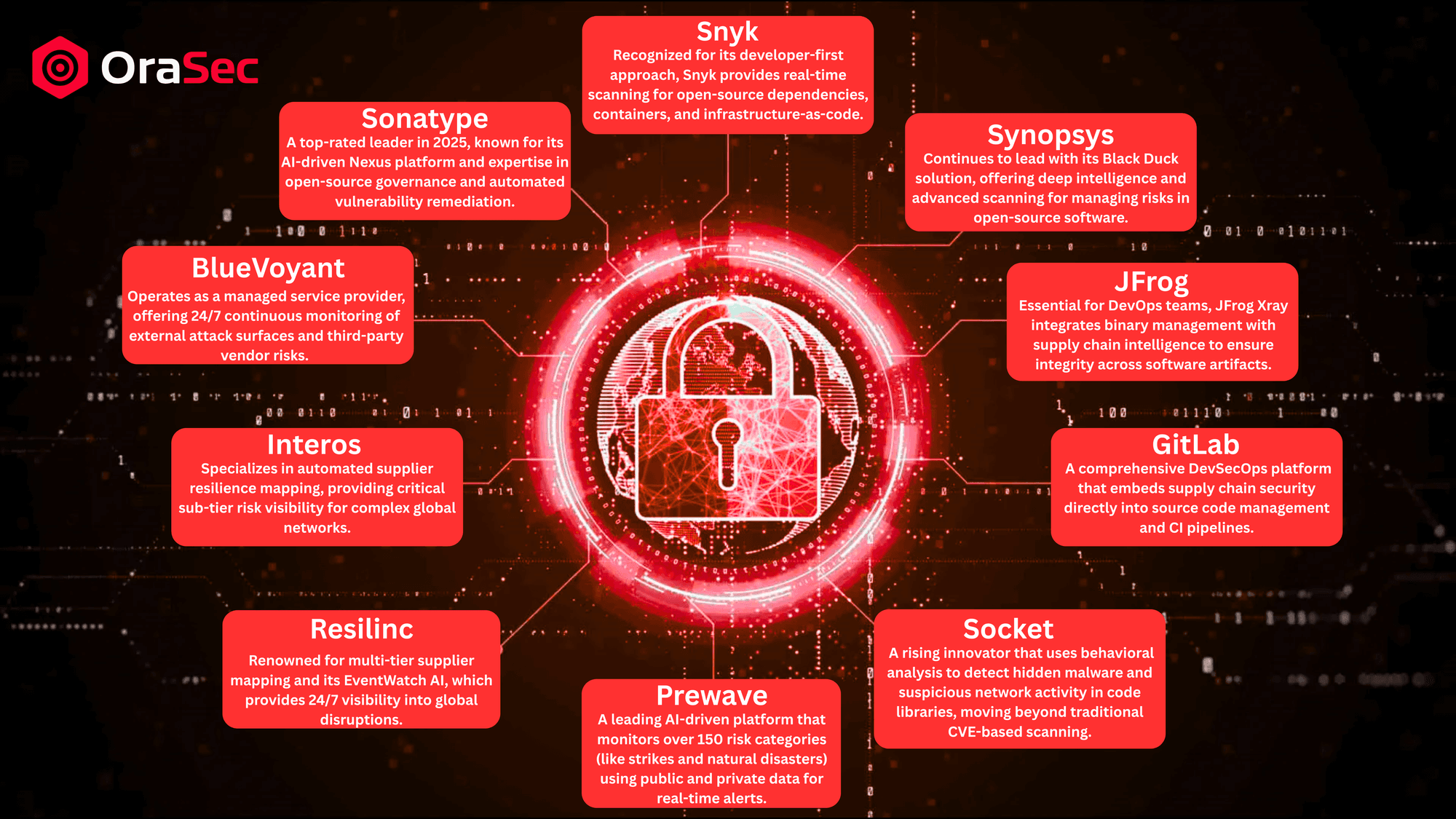
Comparison Table: Top 10 Best Supply Chain Intelligence Security Companies 2026

Top 10 Best Supply Chain Security Companies
Sonatype: The AI-Driven Leader
Sonatype’s Nexus platform secures software supply chains by automating open-source governance, compliance, and security.
- Specifications: Software Composition Analysis (SCA) and continuous monitoring, integrated with CI/CD and developer tools.
- Features: Automated vulnerability scanning, policy enforcement, real-time intelligence, and malicious code detection.
- Reason to Buy: Advanced AI-driven intelligence and enterprise-grade governance ensure smooth integration for DevSecOps practices.
- Pros: Extensive vulnerability database, deep governance, AI-powered monitoring.
- Cons: Higher cost for small businesses; learning curve for beginners.
- Best For: Enterprises needing scalable, AI-driven supply chain security.
Snyk: The Developer-First Choice
Snyk focuses on fixing vulnerabilities early in the development lifecycle. It scans open-source dependencies, containers, and infrastructure.
- Specifications: SaaS-based, multi-layered security across packages, containers, and infrastructure.
- Features: AI-powered scanning, license compliance checks, automated fixes.
- Reason to Buy: Developer-centric design ensures security is integrated into coding workflows and CI/CD pipelines.
- Pros: Easy-to-use, wide integration ecosystem, intelligent prioritization of vulnerabilities.
- Cons: Limited offline support; pricing may challenge startups.
- Best For: Developer teams building secure, cloud-native applications.
Synopsys: Compliance and Scale
Synopsys’ Black Duck solution provides enterprise-grade risk and compliance management, particularly for open-source software in regulated industries.
- Specifications: Scalable Software Composition Analysis (SCA) for vulnerability and license compliance scanning, integrated into CI/CD pipelines for enterprise-level governance.
- Features: Deep scanning of dependencies, advanced risk management, real-time intelligence on malicious components, and automated reporting for regulatory audits.
- Reason to Buy: Trusted by organizations in compliance-heavy industries, Synopsys offers granular control over supply chain security, reducing risk while ensuring regulatory adherence and operational reliability.
- Pros: Strong compliance capabilities, detailed risk insights, enterprise scalability, and extensive vulnerability management to support complex environments.
- Cons: Advanced features require training and dedicated resources; primarily suited for large-scale enterprise operations.
- Best For: Enterprises with strict compliance requirements and large-scale operations needing comprehensive risk management.
JFrog: Binary and Artifact Assurance
JFrog secures the entire DevOps lifecycle with Artifactory and Xray, ensuring integrity across binaries, packages, and open-source components.
- Specifications: JFrog Xray integrates with Artifactory to provide end-to-end visibility and traceability for binaries and open-source artifacts across pipelines.
- Features: Automated binary scanning, policy enforcement, supply chain vulnerability alerts, and “shift-left” security embedded in DevOps workflows.
- Reason to Buy: JFrog’s focus on binaries ensures complete protection of artifacts, enabling agile development while maintaining high security standards across production pipelines.
- Pros: Best-in-class binary scanning, highly integrative ecosystem, real-time monitoring of vulnerabilities, and comprehensive artifact assurance.
- Cons: Complexity for non-technical teams; premium pricing for full-featured packages.
- Best For: DevOps-driven organizations needing detailed artifact-level assurance and secure pipeline practices.
GitLab: Unified DevSecOps Platform
GitLab combines code management, CI/CD, and security into a single platform, reducing operational complexity.
- Specifications: Built-in CI with SCA, SAST, and vulnerability management ensures that every commit and dependency is secure and compliant.
- Features: Integrated application security testing, compliance automation, workflow integration, and real-time threat visibility across development and production environments.
- Reason to Buy: GitLab reduces complexity by combining DevOps and security, improving efficiency while ensuring that security controls are enforced consistently across projects.
- Pros: All-in-one DevSecOps platform, seamless CI/CD and SCM integration, enhanced threat visibility, and compliance support.
- Cons: Rich feature set can overwhelm beginners; Ultimate tier is costly for smaller teams.
- Best For: Teams seeking a unified platform that covers development, CI/CD, and supply chain security in a single interface.
BlueVoyant: Managed Third-Party Risk
BlueVoyant provides managed supply chain risk services, offering continuous monitoring of third-party vendors and supply chain partners.
- Specifications: Managed platform with 24/7 monitoring, predictive analytics, and vendor risk scoring for comprehensive third-party risk visibility.
- Features: Detailed dashboards, ongoing risk assessment, remediation guidance, and regulatory compliance reporting.
- Reason to Buy: Organizations with complex vendor ecosystems benefit from proactive monitoring and expert support, reducing the operational burden of third-party risk management.
- Pros: Managed service reduces internal workload, strong focus on vendor risk, and excellent compliance support.
- Cons: Less developer-focused; requires collaboration with external service teams.
- Best For: Enterprises managing large, complex third-party ecosystems that need continuous risk protection.
Helpful for you: Defending Against Business Email Compromise
Socket: Open-Source Malware Defense
Socket focuses on protecting open-source ecosystems against malware and supply chain attacks that can silently compromise code integrity.
- Specifications: Monitors open-source packages and conducts behavioral analysis for npm, Yarn, and other popular package managers, detecting unusual or malicious activity.
- Features: Dependency malware detection, abnormal permission request analysis, real-time alerts, and actionable guidance for secure development.
- Reason to Buy: Socket goes beyond traditional CVE-based scanning, offering behavioral analysis that identifies hidden threats and ensures open-source components remain safe for production.
- Pros: Innovative malware detection for open-source tools, lightweight developer integration, strong focus on proactive supply chain security.
- Cons: Enterprise adoption is growing but limited; compliance automation features are less developed than some competitors.
- Best For: Developer teams heavily relying on open-source software who need granular protection against emerging threats and unusual malware behaviors.
Data Theorem: API and Cloud Focus
Data Theorem delivers end-to-end visibility into vulnerabilities across APIs, mobile applications, and cloud systems, particularly for modern microservices architectures.
- Specifications: Combines automated vulnerability scanning, compliance testing, and DevOps integration, covering web, mobile, and API endpoints for comprehensive protection.
- Features: API threat detection, mobile app vulnerability scanning, compliance automation, DevOps pipeline integration, and actionable intelligence for development teams.
- Reason to Buy: Organizations relying heavily on APIs or mobile-first strategies benefit from continuous supply chain protection, ensuring secure digital ecosystems and reliable software delivery.
- Pros: Strong focus on API and mobile security, automated vulnerability management, robust DevOps integration, and real-time visibility.
- Cons: Less emphasis on traditional open-source component risks; advanced features require skilled teams to maximize value.
- Best For: Enterprises with API-driven architectures, cloud-first deployments, or mobile-focused applications seeking reliable, proactive protection.
ThreatWorx: Predictive Intelligence
ThreatWorx stands out for predictive, intelligence-led supply chain security, helping organizations anticipate attacks before they happen.
- Specifications: Real-time vulnerability management, policy enforcement, and CI/CD integration using AI modules to prioritize risks efficiently across the supply chain.
- Features: Continuous monitoring, AI-driven risk prediction, threat feed integration, real-time dashboards, and actionable remediation guidance.
- Reason to Buy: ThreatWorx allows enterprises to move from reactive scanning to proactive, predictive threat management, identifying emerging risks before they impact operations.
- Pros: Predictive AI analytics, global threat feed integration, continuous DevOps-friendly coverage, and actionable intelligence for development and security teams.
- Cons: Smaller market share compared to larger vendors; open-source remediation details are limited for some packages.
- Best For: Organizations requiring predictive risk assessment, AI-driven insights, and integration with global intelligence feeds to strengthen supply chain defenses.
Must Read: Top Cybersecurity Threats Facing Businesses
Imperva: Web Application Defense
Imperva provides robust protection for web applications, APIs, and cloud-based services, crucial for organizations managing large digital supply chains.
- Specifications: Application security suite including Web Application Firewall (WAF), API security gateway, DDoS mitigation, and real-time monitoring for high scalability and cloud-native support.
- Features: Comprehensive application and API security, bot attack mitigation, threat detection, real-time risk monitoring, and proactive defense against targeted attacks.
- Reason to Buy: Imperva ensures the safety of web-facing components, preventing attacks that could compromise sensitive data or disrupt business operations within the supply chain.
- Pros: Scalable protection for applications and APIs, extensive security features, robust threat monitoring, and mitigation against sophisticated attacks.
- Cons: Not solely focused on Software Composition Analysis (SCA); higher costs may challenge small-to-medium enterprises.
- Best For: Large organizations needing strong web and API defenses as part of an integrated supply chain security strategy.
Best Overall Supply Chain Security Tools in 2026 (Expert Picks)
| Tool | Best For | Key Strength | Pricing Model |
|---|---|---|---|
| Sonatype | Enterprise SCA & governance | AI-driven malware detection | Paid (Enterprise) |
| Snyk | Developers & startups | CI/CD integration | Freemium + Paid |
| GitLab | All-in-one DevSecOps | Built-in security pipeline | Paid tiers |
| JFrog | Artifact security | Binary-level protection | Paid |
| Synopsys Black Duck | Compliance-heavy industries | Deep SCA & audits | Enterprise |
| Socket | Open-source protection | Behavioral malware detection | Freemium |
| BlueVoyant | Vendor risk management | Managed security service | Enterprise |
| Imperva | Web/API protection | WAF + API security | Enterprise |
Common Issues in Supply Chain Security Tools
- Dependency confusion attacks in open-source packages
- Malicious code injection in third-party libraries
- Weak CI/CD pipeline security
- Lack of visibility into nested dependencies
- Outdated or unpatched open-source components
- Insufficient vendor risk monitoring
- Poor secret management in development pipelines
Which Supply Chain Security Tool Should You Choose? (Use Case Based)
| Use Case | Recommended Tool |
|---|---|
| Startup / small dev team | Snyk, Socket |
| Enterprise DevSecOps | GitLab, Sonatype |
| Compliance-heavy industry | Synopsys Black Duck |
| API-driven systems | Imperva, Data Theorem |
| Managed security needed | BlueVoyant |
| Artifact & binary protection | JFrog |
| Web + cloud protection | Imperva |
Beyond the Tools: The Role of Penetration Testing
Even the most advanced platforms require independent verification to ensure full protection. Expert services like OraSec provide penetration testing across Web, Mobile, API, Network, and Internal Infrastructure. By simulating real-world attacks, these services uncover hidden weaknesses and misconfigurations that automated tools may miss, enabling proactive remediation before malicious actors exploit vulnerabilities. Incorporating penetration testing into your supply chain security strategy enhances confidence, ensures regulatory compliance, and strengthens internal and external systems crucial to your operations.
Conclusion
Securing the digital supply chain is non-negotiable in 2026. Choosing one of these Best Supply Chain Security Companies is a necessary first step toward achieving resilience. We have discussed solutions ranging from developer-focused tools like Snyk to managed services like BlueVoyant and highly integrated platforms like GitLab. Ultimately, the right choice depends on your organization’s size, development maturity, and specific compliance needs.
FAQs
What is supply chain security, and why is it important?
Supply chain security protects software, hardware, and services from vulnerabilities, attacks, and unauthorized access. It is essential because modern businesses rely on third-party components, open-source libraries, and external APIs, which can introduce hidden risks. Strong supply chain security reduces operational disruptions, prevents financial loss, and safeguards sensitive data.
What are the most common supply chain attacks?
Common supply chain attacks include dependency hijacking, inserting malicious code into open-source libraries, tampering with binaries, and exploiting unpatched software. Attackers can target development pipelines, third-party vendors, or APIs, making proactive monitoring, continuous scanning, and threat intelligence critical for protection.
How do supply chain security tools help organizations?
Supply chain security tools provide visibility, automated vulnerability scanning, compliance management, and real-time alerts. They help businesses monitor dependencies, detect threats early, enforce policies, and ensure that development pipelines and production systems remain secure from both known and emerging risks.
Should small businesses invest in supply chain security?
Yes. Even small businesses using third-party components or open-source code face risks. Scalable solutions or SaaS-based tools allow smaller teams to implement monitoring, automated fixes, and compliance checks without requiring large security departments. Early protection prevents costly breaches.
What is the role of AI in supply chain security?
AI helps prioritize vulnerabilities, detect anomalies, and predict potential attacks. It allows organizations to focus on high-risk issues, analyze complex dependency networks, and continuously monitor software components, providing faster, more accurate, and proactive security coverage.
Are developer-focused tools better than managed security services?
Developer-focused tools, like Snyk, integrate directly into coding workflows and CI/CD pipelines, ensuring vulnerabilities are addressed early. Managed services, like BlueVoyant, provide expert monitoring, vendor risk management, and compliance support. The choice depends on team size, technical expertise, and organizational needs.
Do I still need penetration testing if I use these tools?
Yes. While automated tools detect vulnerabilities and monitor threats, penetration testing simulates real-world attacks to uncover hidden weaknesses. Combining these tools with professional pentesting ensures a comprehensive, proactive supply chain security strategy.
How often should supply chain security be reviewed?
Continuous monitoring is ideal, but organizations should review policies, dependencies, and security configurations at least quarterly. Regular audits, updates, and penetration tests ensure that emerging vulnerabilities and new third-party risks are promptly addressed.