Most breaches start with a setting that was fine in testing and never revisited. An API gateway that shouldn't be public. An auth check not wired up. An internal route a tick box exposed. Each reads as minor. Chained, they hand an attacker the keys.
What Is API Gateway Misconfiguration?
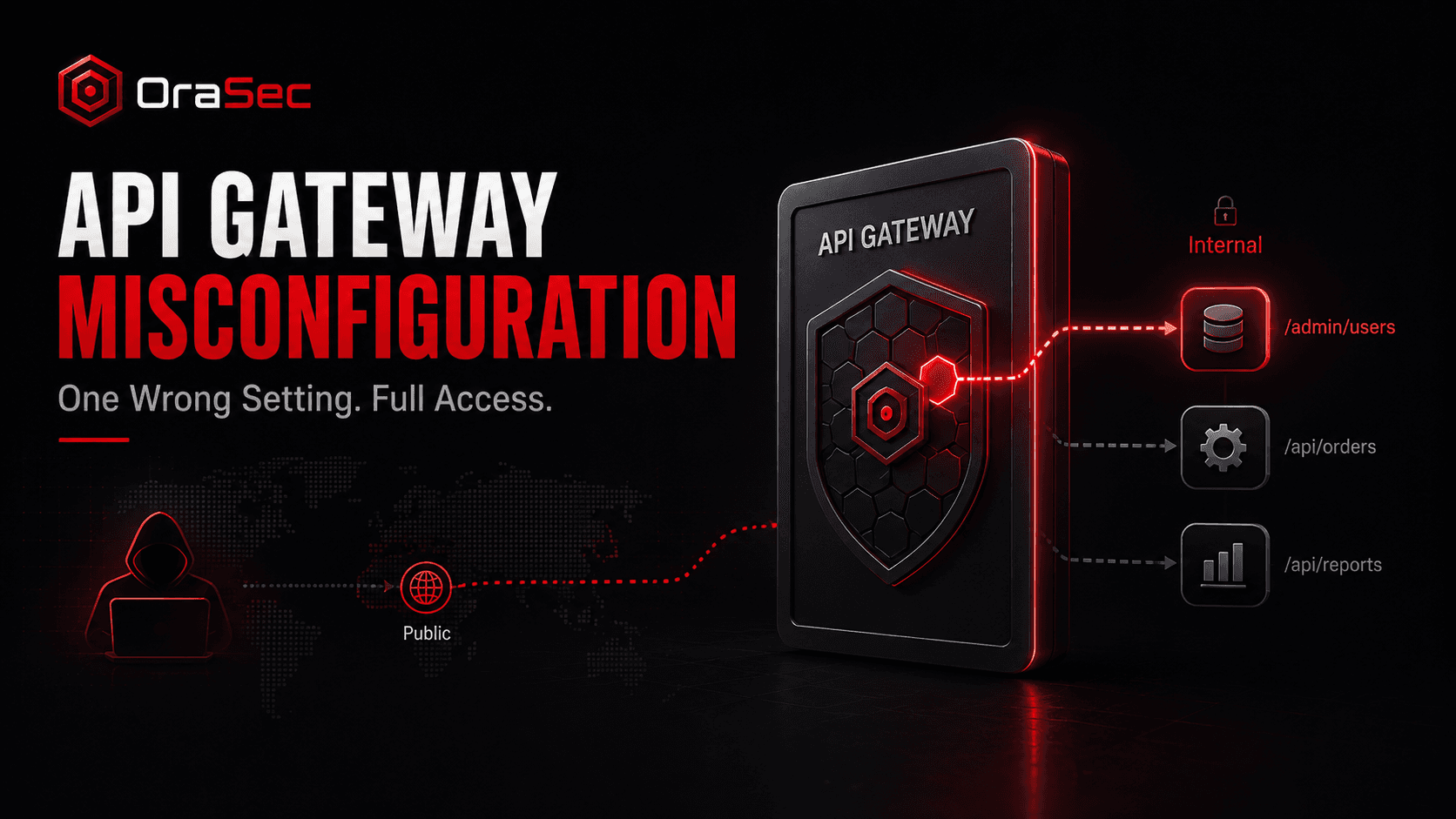
An API gateway sits between clients and backend services. It can handle routing, authentication, rate limiting, and access policies.
Gateway misconfiguration can create several API risks. OWASP API8:2023 covers Security Misconfiguration, while missing authorization, weak authentication, and forgotten API versions may also fall under other API Top 10 categories.
How Does the Attack Work?
The path is short:
- Discover the gateway through internet scanning
- Enumerate endpoints from public docs or JavaScript
- Test each for missing or inconsistent authentication
- Find a route that behaves differently
- Query, modify, or reset data through it
- Use the exposed function to access data, escalate privileges, or potentially take over accounts, depending on what the endpoint allows
Nothing exotic. Well-formed requests to an endpoint that should've said no.
This is exactly the type of weakness API security testing is designed to uncover.
Why Does It Matter?
API attacks are quiet. No suspicious login screen, no attachment, no crashed service.
Weak monitoring can delay detection, especially when malicious requests resemble normal API traffic.
Real-World Pattern: The Internal API That Went Public
A common pattern in API security testing is an internal route becoming reachable through a public gateway.
A company runs one gateway for public and private APIs. Customer traffic hits public routes, internal tools hit private ones. In production, an internal user-management route gets mapped through the public listener.
Authentication is loose. Authorisation trusts a header the caller controls. A probe returns user records that should never leave the network. From there an attacker can query accounts, reset passwords, and impersonate any user. The mistake is small. The blast radius is the whole platform.
Common API Gateway Mistakes
- Internal routes on a public listener. A routing rule nobody reviewed.
- Authentication per route, not by default. One missed route is enough.
- Authorisation from headers the caller sets.
X-User-Idfrom a browser is not identity. - Rate limits enforced only at the gateway. If the backend is directly reachable, an attacker may bypass those controls.
- Overly permissive CORS. Allowing untrusted origins can expose API responses to malicious websites when browser-based authentication or tokens are involved.
- Verbose errors leaking stack traces or hostnames. Free reconnaissance.
- Old API versions still live. Older versions may lack security controls added to newer releases.
Why Traditional Tools Miss It
Firewalls see requests to a permitted destination. Automated scanners can find many configuration issues, but they often cannot prove complex authorization flaws or business-logic abuse without role-based testing.
This is a logic problem, not a software bug. To find it, exercise the API as an attacker would. Then compare what each role reaches against what it should.
How to Prevent It
Treat gateway configuration as code. Review it as code. Test it as code.
- Separate public and internal API exposure where practical, using network segmentation, private endpoints, or distinct gateway policies
- Apply auth by default, then allow exceptions explicitly
- Never trust identity from a header the caller can set
- Keep OpenAPI specs current and generate policy from them
- Enforce rate limits and auth at the backend too, not just the gateway
- Centralize authentication, authorization, and error logs with enough context to detect enumeration and abuse without logging sensitive secrets
- Retire old API versions rather than leaving them live
What Should Security Testing Cover?
Ask your testers to prove:
- Whether any internal route is reachable through the public gateway
- Whether auth is enforced on every endpoint, including old versions
- Whether one role can access another's data
- Which identity headers the backend trusts and whether they can be forged
- Whether the gateway can be bypassed to reach the backend
If the backend accepts unauthenticated calls when bypassed, the gateway was doing all the work.
How OraSec Can Help
OraSec tests APIs the way attackers use them. We map every route, check what each role can reach, and try the requests your team assumes will fail. You get a proven attack path, not a scanner alert.
Conclusion
An API gateway is only as strong as its weakest route. One exposed endpoint, one missing check, and the account system is in play.
Treat gateway config as security code. Test from outside. Assume a misconfiguration exists until someone has looked.
FAQs
Isn't an API gateway a security tool? Only when configured correctly. A gateway with loose defaults is just a routing layer.
Do WAFs help with this? They block obvious payloads but can't determine which caller should reach which route.
Are internal APIs really targeted from outside? The moment a route is reachable from the internet, it's external. Attackers scan continuously.
How often should we test APIs? After any routing, auth, or version change, and at least alongside your regular pentest cycle.
Does OpenAPI documentation help attackers? Documentation can make endpoint discovery easier, but it is also essential for secure API management. Keep internal API documentation restricted to authorized users and ensure public documentation exposes only intended APIs.