Cybersecurity threats are evolving beyond traditional attacks, targeting the way users interact with applications. One of the most critical yet often overlooked risks is session hijacking. This attack allows adversaries to take control of a valid user session without needing login credentials. Session hijacking is particularly dangerous because it exploits active sessions, meaning attackers can bypass authentication mechanisms entirely. This makes it a high-impact threat for web applications, APIs, and online services handling sensitive data.
Understanding how session hijacking works, its types, risks, and prevention strategies is essential for protecting user data and maintaining secure systems. In this guide, you will learn how these attacks operate and how to defend against them effectively.
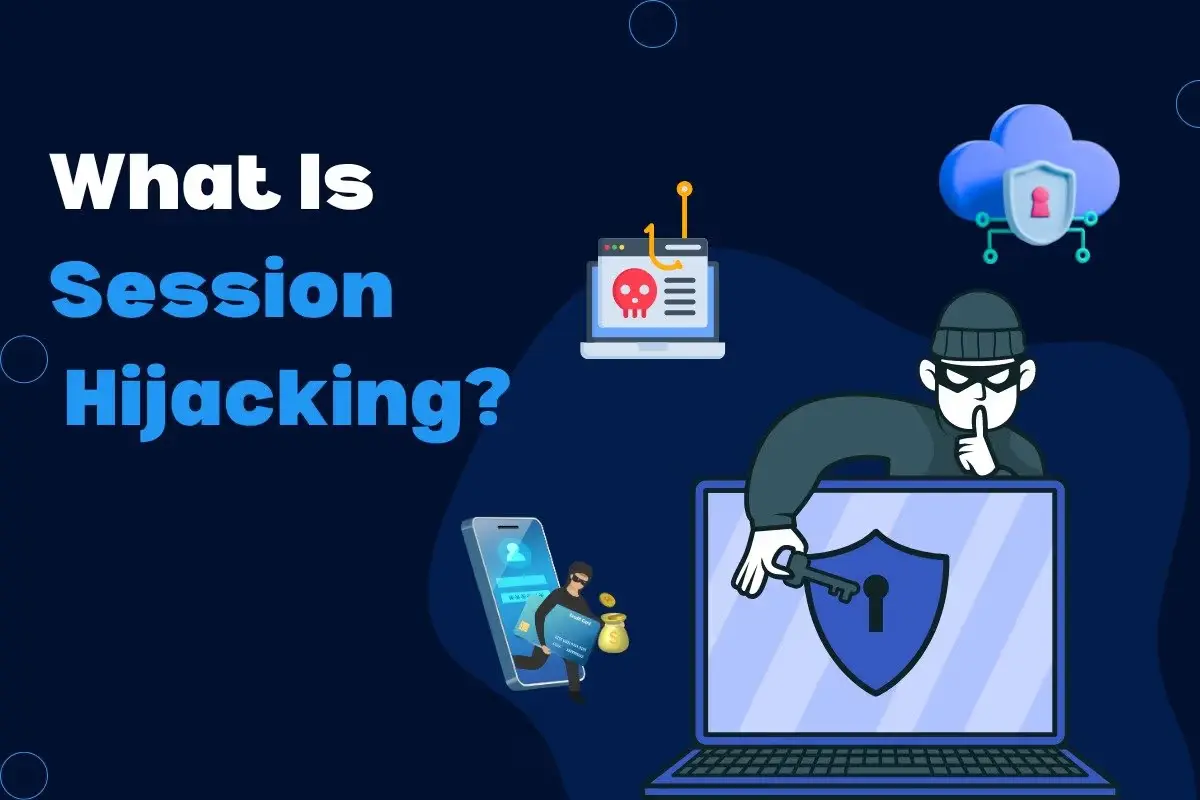
What Is Session Hijacking
Session hijacking is a type of cyberattack where an attacker takes control of a valid user session to gain unauthorized access to an application. Instead of breaking authentication, the attacker steals or guesses the session identifier used to maintain a logged-in state. Once the attacker gains access to the session token, they can impersonate the legitimate user and perform actions within the application. This may include accessing sensitive data, making transactions, or modifying account settings. Because the session is already authenticated, traditional security controls may not detect the intrusion, making session hijacking particularly dangerous.
How Session Hijacking Works
- A user logs into a web application, and the server creates a session with a unique session ID.
- This session ID is stored in cookies, URLs, or headers to maintain the user’s authenticated state.
- An attacker intercepts, steals, or predicts this session ID using various techniques.
- The attacker uses the stolen session ID to send requests to the server.
- The server treats these requests as legitimate, granting unauthorized access without requiring login credentials.
Also Read: What Is Server-Side Request Forgery?
Types of Session Hijacking
1. Session Sidejacking
Session sidejacking occurs when attackers intercept session cookies over unsecured networks. This often happens on public Wi-Fi where data is transmitted without encryption. Attackers capture session tokens using packet sniffing tools and reuse them to access user accounts. This method is highly effective when applications do not enforce secure communication protocols.
2. Session Fixation
In session fixation attacks, the attacker sets or predicts a session ID before the user logs in. Once the user authenticates, the attacker uses the same session ID to gain access. This typically occurs when applications fail to generate a new session ID after login. It allows attackers to bypass authentication without directly stealing session data.
3. Cross-Site Scripting (XSS)-Based Hijacking
Attackers use XSS vulnerabilities to inject malicious scripts into web pages. These scripts can capture session cookies from users and send them to the attacker. Once obtained, the attacker can use the session information to impersonate the victim. This type of hijacking combines multiple vulnerabilities, increasing its impact.
4. Man-in-the-Middle (MITM) Attack
In a MITM attack, the attacker positions themselves between the user and the server. They intercept and potentially modify communication, including session tokens. This allows attackers to capture active session data in real time. Such attacks are especially dangerous on insecure networks or poorly configured systems.
Related: Why Attackers Love Non-Production Environments
Risks and Impact of Session Hijacking
1. Unauthorized Account Access
Session hijacking allows attackers to take over active user sessions without needing credentials. This gives them direct access to accounts, enabling actions such as viewing sensitive data or changing account settings. Since the session is valid, the system often treats the attacker as a legitimate user.
2. Financial Fraud and Transaction Manipulation
Attackers can use hijacked sessions to initiate unauthorized transactions, change billing details, or redirect payments. This can result in immediate financial losses for both users and businesses. Detecting such fraud is challenging because the activity appears legitimate.
3. Data Breaches and Sensitive Information Exposure
Hijacked sessions can expose confidential information such as personal data, financial records, and internal business details. This can lead to large-scale data breaches affecting multiple users. The impact often extends beyond immediate loss to long-term trust issues.
4. Reputational Damage and Loss of Customer Trust
Security incidents involving session hijacking can significantly harm a company’s reputation. Customers expect their data to be secure, and any breach reduces confidence in the platform. Rebuilding trust after such incidents can be difficult and time-consuming.
5. Compliance Violations and Legal Consequences
Organizations may fail to meet regulatory requirements if session hijacking leads to data exposure. This can result in penalties under frameworks such as GDPR or HIPAA. Legal consequences and audits can further increase operational burden.
6. Privilege Escalation Risks
Attackers may use hijacked sessions to gain higher-level access within the system. If administrative sessions are compromised, it can lead to full system control. This significantly increases the severity and scope of the attack.
7. Unauthorized System Changes
With access to active sessions, attackers can modify configurations, delete data, or alter application behavior. These changes can disrupt business operations and affect service availability. In some cases, recovery may require significant effort and downtime.
8. Increased Risk of Further Attacks
Session hijacking can act as a gateway to more advanced attacks. Once inside the system, attackers can move laterally, exploit additional vulnerabilities, or deploy malware. This increases the overall security risk and potential damage.
Helpful Guide: Best Free Malware Analysis Tools
How to Detect Session Hijacking Attempts
- Monitor unusual login locations or IP address changes
- Detect multiple sessions for the same user from different locations
- Identify abnormal session duration or activity patterns
- Track repeated use of the same session ID across different devices
- Monitor sudden privilege changes during active sessions
- Analyze user behavior anomalies
- Detect rapid or automated request patterns
- Implement session timeout and monitor inactive sessions
- Use intrusion detection systems (IDS)
- Monitor failed authentication attempts followed by successful access
- Track suspicious API calls using session tokens
- Use logging and real-time monitoring tools
- Implement user activity tracking and alerts
- Detect unusual device fingerprints
- Conduct regular security audits and testing
Related: Top Malware Persistence Mechanisms Used by Hackers
Best Practices to Prevent Session Hijacking

1. Enforce HTTPS Across All Communications
All data exchanged between users and servers should be encrypted using HTTPS. This prevents attackers from intercepting session data over insecure networks. Enforcing secure communication is a foundational step in preventing session hijacking.
2. Use Strong and Random Session IDs
Session identifiers should be long, unpredictable, and securely generated. Weak or predictable session IDs make it easier for attackers to guess or brute-force active sessions. Proper session generation reduces the likelihood of successful attacks.
3. Regenerate Session IDs After Authentication
Always generate a new session ID after a user logs in. This prevents session fixation attacks by invalidating any previously assigned identifiers. It ensures that attackers cannot reuse session tokens set before authentication.
4. Implement Secure Cookie Attributes
Use security flags such as HttpOnly and Secure for session cookies. HttpOnly prevents client-side scripts from accessing cookies, while Secure ensures they are only transmitted over encrypted connections. This reduces the risk of cookie theft.
5. Set Proper Session Timeouts
Sessions should automatically expire after a period of inactivity. Shorter session lifetimes reduce the window of opportunity for attackers. Proper timeout policies help limit exposure if a session is compromised.
6. Monitor and Detect Suspicious Activity
Implement real-time monitoring to detect unusual session behavior such as multiple logins or location changes. Early detection allows security teams to respond quickly to potential hijacking attempts. Logging and alerting are critical components of this process.
7. Bind Sessions to User Context
Link sessions to specific attributes such as IP address or device fingerprint. If there is a sudden change in context, the session can be invalidated. This adds an extra layer of protection against unauthorized access.
8. Conduct Regular Security Testing
Perform penetration testing and security assessments to identify session management weaknesses. Regular testing helps uncover vulnerabilities before attackers can exploit them. It also ensures that security controls remain effective over time.
Also Read: What is Cross-Site Request Forgery?
Real World Examples
Key Takeaways
- Session hijacking allows attackers to take over active user sessions without needing login credentials.
- It works by stealing or manipulating session IDs to impersonate legitimate users.
- Common methods include sidejacking, session fixation, XSS, and man-in-the-middle attacks.
- The impact includes unauthorized access, data breaches, financial loss, and reputational damage.
- Detection relies on monitoring unusual session activity and user behavior patterns.
- Prevention requires secure session management, encryption, and regular security testing.
- Strong security practices help reduce risk and protect sensitive user data.
What Is Session Hijacking
Get Professional Help
Protecting against session hijacking requires more than basic security controls. It involves secure development practices, continuous monitoring, and regular testing of your systems. Orasec provides advanced cybersecurity services, including penetration testing and web application penetration testing services, to identify and mitigate vulnerabilities like session hijacking. Their expertise helps businesses strengthen their defenses and reduce the risk of real-world attacks.
Conclusion
Session hijacking remains one of the most effective ways attackers bypass authentication and gain unauthorized access. As applications become more complex and interconnected, the importance of secure session management continues to grow. By understanding how session hijacking works and implementing strong preventive measures, organizations can significantly reduce their exposure to this threat. Proactive security practices are essential for protecting user data, maintaining trust, and ensuring long-term business resilience.
FAQs
What is session hijacking in simple terms?
Session hijacking is when an attacker takes control of a logged-in user’s session to access their account without needing a password.
How do attackers steal session IDs?
They use techniques like packet sniffing, XSS attacks, or man-in-the-middle attacks to capture session tokens.
Is HTTPS enough to prevent session hijacking?
HTTPS helps reduce risk but is not sufficient alone. Proper session management and security controls are also required.
Can session hijacking affect APIs?
Yes, APIs are highly vulnerable because they rely heavily on session tokens and authentication headers.
How can businesses protect against session hijacking?
By using secure session management, encryption, monitoring, and regular security testing.