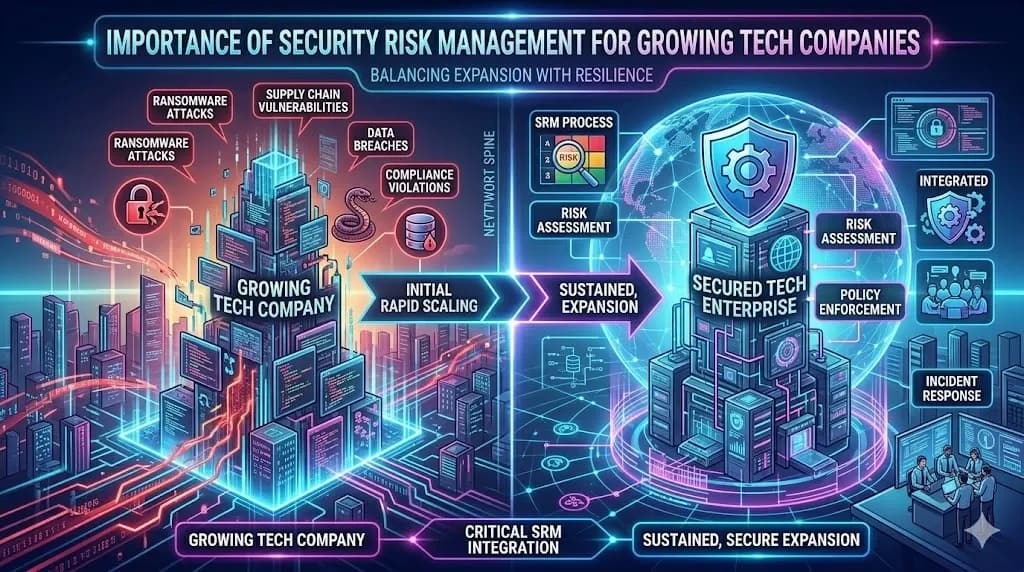
Tech companies expand their digital operations. Growing businesses often adopt new tools, cloud platforms, and applications quickly, which can create hidden security gaps. Without proper risk management, these weaknesses can lead to data breaches, operational disruption, and financial losses. Security risk management helps companies identify threats before they become major incidents. It allows teams to reduce vulnerabilities and improve long-term resilience. In this guide, you will learn why security risk management is essential for growing tech companies.
What Is Security Risk Management
Security risk management is the process of identifying, analyzing, and reducing security threats that could impact business operations. It helps organizations understand where vulnerabilities exist and how attackers may exploit them. This process includes evaluating assets, assessing risks, and implementing controls to reduce exposure. It supports better decision-making by prioritizing the most critical threats. Businesses use security risk management to protect systems, data, and operations. It plays a critical role in maintaining long-term security.
Why Security Risk Management is Important for Growing Tech Companies
Growing tech companies often scale faster than their security infrastructure. As businesses expand teams, products, and digital assets, the attack surface becomes larger. New applications, cloud environments, and third-party tools can introduce security gaps. Without structured risk management, organizations may overlook critical vulnerabilities. A proactive approach helps prevent breaches and supports business continuity. It allows companies to grow without increasing unnecessary security risks.
Helpful for you: Reasons Why Cybersecurity Is Essential in Today’s Digital World
Types Of Security Managements
1. Information Security Management
This focuses on protecting sensitive business information from unauthorized access, theft, or misuse. It includes policies, controls, and monitoring processes. Companies use it to secure customer and internal data. It helps maintain confidentiality and compliance.
2. Network Security Management
This protects networks from unauthorized access and cyber threats. It includes firewalls, intrusion detection systems, and traffic monitoring. It helps secure communication channels. Strong network controls reduce attack opportunities.
3. Application Security Management
This focuses on protecting applications from vulnerabilities and attacks. It includes secure development practices and regular testing. Businesses use it to secure web and mobile applications. It helps reduce exploitation risks.
4. Cloud Security Management
Cloud environments introduce unique risks related to misconfigurations and access controls. This management approach protects cloud infrastructure and workloads. It helps secure remote environments. It reduces cloud-related threats.
5. Operational Security Management
This focuses on internal processes that protect systems and assets. It includes access management, employee policies, and incident handling. Strong operational controls improve security governance. It helps reduce internal risks.
Must Read: Best Anti-Phishing Tools in 2026
Common Security Risks Faced by Growing Tech Companies
- Cloud misconfigurations
- Weak access controls
- Insider threats
- Phishing attacks
- Ransomware attacks
- API vulnerabilities
- Unpatched software
- Third-party vendor risks
- Weak password practices
- Data breaches
- Malware attacks
- Social engineering attacks
- Shadow IT risks
- Insider misuse of sensitive data
- Compliance violations
- Poor incident response planning
- Insecure remote work environments
- Application vulnerabilities
- Risk-Based
- Distributed denial-of-service attacks
Components of Cyber Security Risk Management
Importance Of Security Risk Management

1. Protects Sensitive Business Data
Security risk management helps organizations identify weaknesses that could expose sensitive information such as customer records, financial data, and intellectual property. Data breaches can damage trust and create legal issues. Strong risk management helps prevent unauthorized access. It improves overall data protection.
2. Reduces Financial Losses
Cyberattacks can create significant financial losses through downtime, recovery costs, legal penalties, and reputational damage. Security risk management helps reduce the likelihood of these incidents. Preventing attacks lowers unexpected expenses. It protects long-term profitability.
3. Prevents Operational Disruptions
Security incidents can interrupt business operations and affect productivity. Risk management helps organizations identify threats before they cause system outages or service disruptions. This improves operational stability. It supports business continuity.
Also Read: MongoDB Security: Common Risks and How Companies Get Breached
4. Improves Regulatory Compliance
Many industries must comply with cybersecurity regulations and data protection standards. Security risk management helps businesses identify compliance gaps and strengthen controls. This reduces legal risks. It improves audit readiness.
5. Strengthens Customer Trust
Customers expect businesses to protect their personal and financial information. Strong security practices help build confidence and improve brand reputation. Security failures can damage long-term relationships. Risk management helps maintain trust.
6. Supports Faster Incident Response
Organizations can respond faster to cyber incidents when they understand their risks in advance. Risk management helps create response plans and improve readiness. A faster response reduces damage. It improves recovery efforts.
Also Read: Cloud Penetration Testing Rules
7. Protects Cloud Environments
Growing tech companies often rely heavily on cloud infrastructure. Security risk management helps identify cloud misconfigurations, access issues, and third-party risks. This reduces cloud exposure. It strengthens cloud security.
8. Secures Remote Work Environments
Remote teams introduce new security challenges related to devices, networks, and access controls. Risk management helps organizations secure distributed work environments. This reduces remote work threats. It improves workforce protection.
9. Improves Security Decision Making
Businesses make better decisions when they clearly understand their biggest risks. Security risk management helps prioritize resources based on business impact. This improves planning efficiency. It reduces unnecessary spending.
10. Supports Long-Term Business Growth
Companies cannot scale securely without strong risk management processes. Security helps businesses grow without increasing unnecessary exposure. It protects future operations. It creates long-term resilience.
Challenges in Security Risk Management
- Limited security budgets restrict proper implementation of security controls
- Rapid business growth increases the attack surface quickly
- Lack of skilled security professionals creates operational gaps
- Difficulty in managing third-party vendor risks
- Constantly evolving cyber threats require continuous monitoring
- Poor security awareness among employees increases human error risks
- Complex IT environments make risk tracking harder
- Weak governance and unclear security policies reduce effectiveness
- Delayed detection of security incidents increases damage potential
- Integration issues between new and legacy systems create vulnerabilities
Best Practices for Security Risk Management
- Conduct regular security assessments and audits
- Implement strong access controls using least privilege principles
- Train employees regularly on cybersecurity awareness
- Develop and test incident response plans
- Monitor systems and networks continuously
- Apply security patches and updates promptly
- Secure cloud environments with proper configurations
- Perform regular penetration testing and vulnerability scanning
- Maintain updated compliance and audit documentation
- Continuously review and improve security policies
Integrating SRM To Your Business Strategy with Orasec
Security should enable business growth instead of slowing it down. Orasec helps organizations embed security risk management into their long-term strategy through penetration testing, vulnerability assessments, and proactive security planning. This approach allows businesses to detect and address weaknesses before attackers can exploit them. It also improves visibility across systems, applications, and cloud environments. As a result, companies make more informed security decisions and strengthen their overall protection. This enables them to scale confidently with reduced security risks.
Conclusion
Growing tech companies face increasing security challenges as they expand their digital environments. Without proper risk management, hidden vulnerabilities can create serious business risks. Security risk management helps organizations identify threats, reduce exposure, and improve resilience. A proactive approach protects systems, customers, and operations. It also supports long-term business growth. Strong security planning is essential for sustainable success.
FAQs
What is security risk management?
It is the process of identifying, analyzing, and reducing cybersecurity risks.
Why is it important for tech companies?
Growing companies face expanding attack surfaces and higher security risks.
What are common cybersecurity risks for tech companies?
Common risks include phishing, ransomware, cloud misconfigurations, and insider threats.
What is a risk-based security approach?
It prioritizes security efforts based on threat severity and business impact.
How can companies improve security risk management?
They can conduct assessments, improve controls, train employees, and perform regular testing.