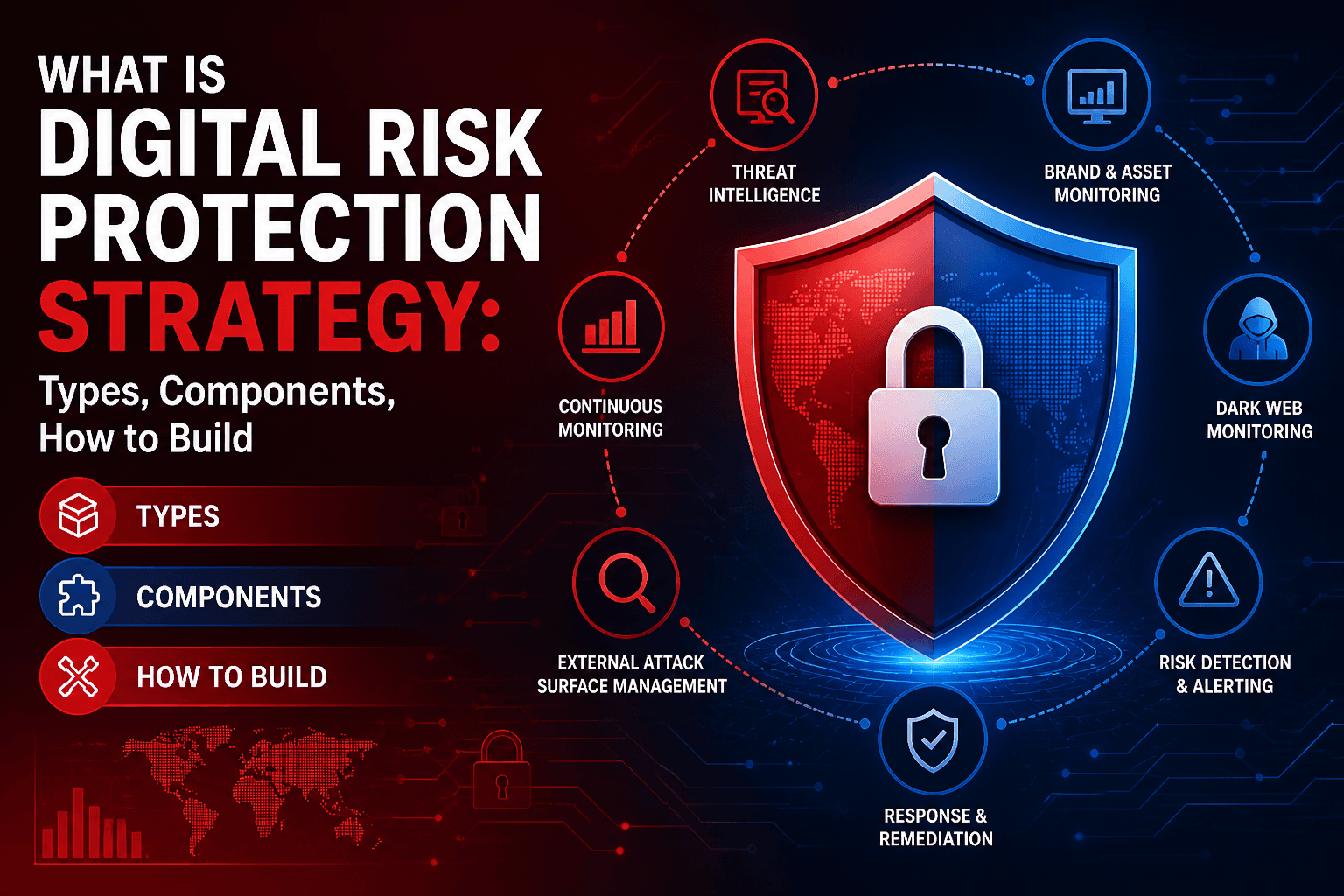
In today’s interconnected digital environment, organizations face growing risks that extend far beyond their internal networks. Cyber threats now target brand reputation, sensitive data, and online assets across multiple external channels. A Digital Risk Protection strategy provides a structured way to continuously identify and respond to these hidden threats. It combines monitoring, intelligence gathering, and automated detection to uncover malicious activity in real time. By analyzing attacker behavior and digital exposure points, it helps organizations stay ahead of potential breaches. This approach strengthens overall security posture by reducing blind spots in the external threat landscape.
What is Digital Risk Protection Strategy
Digital Risk Protection (DRP) Strategy is a structured cybersecurity approach designed to detect, monitor, and mitigate external digital threats targeting an organization’s online presence. It focuses on protecting brand assets, digital identities, sensitive data, and infrastructure from cyber threats that exist beyond traditional network boundaries. DRP works by continuously scanning the surface, deep, and dark web to identify potential risks in real time. It also helps organizations understand how attackers may exploit exposed digital footprints. By combining threat intelligence and automation, it provides early warnings before risks escalate into incidents. Ultimately, it ensures organizations maintain visibility and control over their entire digital ecosystem.
Why is Digital Risk Protection Important?
Digital environments are expanding rapidly, increasing exposure to cyber threats across multiple channels. Organizations now operate across cloud platforms, social media, third-party services, and remote infrastructures. This expansion creates new vulnerabilities that traditional security tools often fail to detect. DRP is important because it provides continuous visibility into external threats that target brand reputation and data security. It also helps prevent financial losses caused by Phishing, impersonation, and data leaks. In addition, it strengthens incident response by identifying threats early and enabling faster mitigation.
Types of Digital Risk Protection
1. Threat Intelligence Monitoring
Threat intelligence monitoring continuously collects, analyzes, and correlates data from multiple sources to identify potential cyber threats before they can cause harm. It helps organizations understand attacker behavior, detect emerging attack patterns, and respond quickly to evolving risks, improving overall security readiness and decision-making.
2. Brand Protection
Brand protection focuses on identifying and stopping misuse of a company’s identity across the internet. This includes detecting fake websites, impersonation accounts, counterfeit products, and unauthorized use of logos or trademarks. By actively monitoring digital platforms, organizations can protect customer trust, prevent fraud, and maintain their reputation.
3. Data Leak Detection
Data leak detection systems, including dark web monitoring, scan the surface web, deep web, and dark web to identify exposed sensitive information such as passwords, customer data, or internal documents. By continuously monitoring hidden and high-risk online sources, these systems help organizations detect breaches at an early stage. As a result, businesses can take immediate action, such as resetting credentials or shutting down compromised access points, significantly reducing the risk of major security incidents and long-term data exposure.
4. Attack Surface Management
Attack surface management involves continuously identifying and monitoring all external-facing digital assets such as domains, cloud services, APIs, and servers. It helps organizations discover unknown or misconfigured assets that could be exploited by attackers, allowing them to reduce vulnerabilities and strengthen their security posture.
5. Fraud and Phishing Protection
Fraud and phishing protection systems detect and block malicious activities designed to trick users into revealing sensitive information. This includes fake login pages, deceptive emails, and scam websites. By analyzing behavior patterns and suspicious domains, these systems help prevent credential theft, financial fraud, and unauthorized access.
Also Read: Best Anti-Phishing Tools for Businesses
How to Build a Digital Risk Protection Strategy

1. Define Digital Assets
Organizations must first identify all digital assets and Prioritize Vulnerabilities in domains, applications, and cloud environments. This provides a clear visibility baseline. It also helps prioritize protection efforts. Understanding assets ensures no critical resource is overlooked. This step forms the foundation of DRP.
2. Establish Threat Intelligence Sources
Reliable intelligence sources should be integrated to track cyber threats. These include threat feeds and dark web monitoring tools. Continuous updates improve situational awareness. It helps detect emerging attack patterns early. This strengthens proactive defense.
3. Map External Attack Surface
Mapping helps identify exposed systems and entry points. It includes tracking shadow IT and forgotten assets. This reduces unknown vulnerabilities. Security teams can then secure weak points effectively. It improves overall visibility.
Helpful for you: Powerful Reasons Why Cybersecurity Is Essential
4. Implement Brand Monitoring Tools
Brand monitoring tools detect misuse of digital identity. They track fake accounts and impersonation attempts. This protects customer trust and brand reputation. Quick detection allows faster takedown actions. It reduces fraud risks significantly.
5. Integrate Data Leak Detection Systems
These systems monitor leaks across underground platforms. They identify exposed credentials and sensitive files. Early alerts help prevent exploitation. Organizations can reset compromised access quickly. This reduces breach impact.
6. Enable Continuous Monitoring
Continuous monitoring ensures Real-Time Cyber Protection. It reduces response time to incidents. Automated alerts improve efficiency. Security teams can act immediately on risks. This maintains constant protection coverage.
Must Read: Benefits of IDR Automation for Incident Response
7. Define Risk Prioritization Framework
Not all risks carry equal impact. A prioritization framework helps focus on critical threats first. It uses severity and business impact analysis. This improves resource allocation. It ensures faster mitigation of high-risk issues.
8. Automate Incident Response
Automation reduces manual effort in handling threats. It enables faster containment of risks. Predefined workflows improve response consistency. This minimizes damage from cyber incidents. It strengthens operational efficiency.
9. Conduct Regular Risk Assessments
Regular assessments help evaluate security posture. They identify gaps in existing defenses. This ensures continuous improvement. It also aligns strategy with Evolving Threats Due to AI . Organizations stay prepared against new attack methods.
10. Train Security Teams
Well-trained teams respond more effectively to threats. Training improves awareness of emerging risks. It enhances decision-making during incidents. Employees become active participants in security. This strengthens overall resilience.
Also Read: Red Team vs Blue Team vs Purple Team
Common Digital Risks Your Strategy Must Address
- Phishing attacks targeting employees and customers
- Brand impersonation across social media platforms
- Credentials Leaks on the Dark Web marketplaces
- Malware distribution through fake websites
- Data breaches from cloud misconfigurations
- Third-party vendor security vulnerabilities
- Domain spoofing and typo squatting attacks
- Social engineering campaigns targeting executives
- API Exploitation and unauthorized access attempts
- Insider data exposure through negligence or misuse
The Future of Digital Risk Protection
The future of Digital Risk Protection will be driven by automation, artificial intelligence, and predictive analytics. Security systems will increasingly rely on machine learning to anticipate threats before they occur. DRP will become more integrated with enterprise security ecosystems. It will also expand coverage across IoT, cloud-native systems, and decentralized platforms. Real-time intelligence sharing will become standard practice. Ultimately, DRP will evolve into a fully proactive and predictive security model.
How Orasec Can Help You?
OraSec helps organizations strengthen Digital Risk Protection through expert-led VAPT (Vulnerability Assessment and Penetration Testing), continuous penetration testing (PTaaS), and advanced threat intelligence solutions. Their services simulate real-world attacks across web apps, APIs, networks, and cloud environments to uncover exploitable risks, By combining proactive testing, continuous monitoring, and actionable remediation guidance, OraSec enables businesses to reduce external attack surfaces and stay ahead of evolving cyber threats.
Final Thoughts
A Digital Risk Protection Strategy is essential for modern organizations operating in complex digital environments. It provides continuous visibility into external threats that traditional security tools often miss. By combining intelligence, monitoring, and automation, DRP helps reduce cyber risks effectively. It protects brand reputation, sensitive data, and digital assets from evolving attacks. Organizations that adopt DRP gain stronger resilience against cyber threats. Ultimately, it enables a proactive and structured approach to cybersecurity management.
FAQs
What is a digital risk protection strategy?
A digital risk protection strategy is a proactive cybersecurity approach that identifies, monitors, and mitigates threats across an organization’s digital footprint, including websites, social media, domains, and the dark web.
What is the main purpose of Digital Risk Protection?
Digital Risk Protection is designed to identify and mitigate external cyber threats targeting an organization’s digital assets. It focuses on preventing data leaks, phishing attacks, and brand impersonation. The goal is to provide early threat detection and proactive defense. It enhances visibility across the digital ecosystem. This helps organizations respond before damage occurs.
How is DRP different from traditional cybersecurity?
Traditional cybersecurity focuses on internal network protection, while DRP focuses on external threats. It monitors risks across the internet, including dark web sources. DRP identifies threats before they reach internal systems. It provides broader visibility beyond firewalls. This makes it a complementary security layer.
Who needs Digital Risk Protection?
Any organization with an online presence needs DRP, especially those handling sensitive data. It is crucial for financial institutions, tech companies, and e-commerce platforms. Businesses with strong brand visibility are at higher risk. DRP helps protect both reputation and digital assets. It is essential for modern cybersecurity strategies.
What are the key components of a digital risk protection strategy?
A digital risk protection strategy typically includes threat intelligence, brand monitoring, attack surface management, data leak detection, and incident response to ensure comprehensive protection across digital assets.